Five Common Measurement Errors in Interior Renovation — and How Laser Tools Help Avoid Them
Five Common Measurement Errors in Interior Renovation — and How Laser Tools Help Avoid Them
In interior renovation projects, measurement accuracy directly determines construction quality, efficiency, and final visual results. Even small measurement errors can lead to uneven walls, misaligned tiles, unstable installations, and costly rework. As renovation standards continue to rise in 2025, contractors and installers are increasingly relying on laser measurement tools to eliminate traditional sources of error.
This article identifies five of the most common measurement errors encountered in interior renovation and explains how modern laser tools can effectively prevent them.
1. Relying on manual tools with inconsistent reference points
Traditional tools such as tape measures, spirit levels, and chalk lines depend heavily on the operator’s experience. Differences in eye level, hand positioning, or reference points often lead to accumulated deviations, especially over long distances or large surfaces.
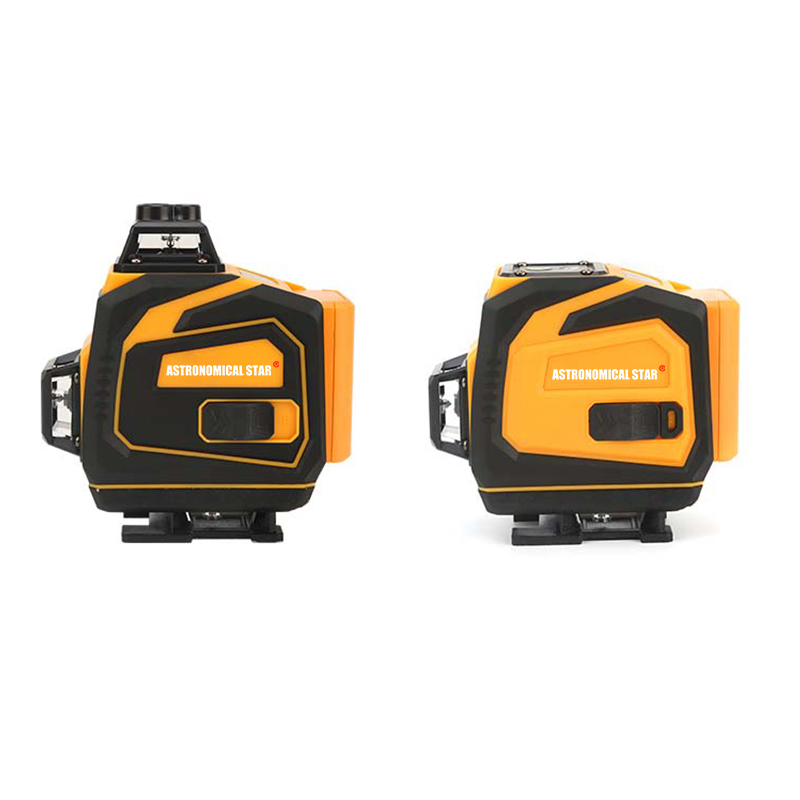
How laser tools help: Laser levels project consistent horizontal and vertical reference lines across an entire space. Once set, the reference plane remains unchanged, allowing multiple workers to rely on the same accurate baseline without repeated manual checks.
2. Cumulative errors across multiple construction stages
In renovation projects, work is usually completed in stages: flooring, wall leveling, ceiling installation, cabinetry, and electrical fixtures. Small inaccuracies at early stages often compound, resulting in noticeable alignment problems later.
How laser tools help: Laser levels provide a unified reference throughout the project lifecycle. Using the same laser reference for each stage ensures continuity and prevents deviation from accumulating across different construction phases.
3. Uneven floors and walls causing false readings
Interior spaces are rarely perfectly flat, especially in older buildings. Using bubble levels or visual estimation on uneven surfaces often produces misleading results, causing incorrect alignments.
How laser tools help: Self-leveling laser levels automatically adjust within a defined range, generating a true horizontal and vertical plane regardless of surface irregularities. This ensures accurate alignment even when floors or walls are uneven.
4. Poor visibility in low-light or high-glare environments
Many renovation sites suffer from inadequate lighting or strong ambient glare, making traditional chalk lines or manual markings difficult to see clearly. This leads to misinterpretation and positioning errors.
How laser tools help: Green laser beams, in particular, offer superior visibility compared to red lasers and manual markings. They remain visible in bright rooms, near windows, and across longer distances, improving accuracy and reducing eye strain.
5. Human error during repeated measurements
Repeated manual measurements increase the likelihood of reading errors, transcription mistakes, and miscommunication between team members. Over time, fatigue further increases the risk.
How laser tools help: Laser measurement tools minimize the need for repetitive manual measurement. Once set, the laser reference remains stable, enabling faster work with fewer opportunities for human error.
Why laser tools are becoming essential in modern renovation
As interior renovation becomes more precision-driven, laser tools have evolved from optional accessories to essential equipment. They improve alignment accuracy, reduce rework, and help teams maintain consistent quality across projects.
For contractors, renovation companies, and professional installers, adopting laser measurement tools is not only about efficiency—it is about delivering reliable, high-quality results that meet modern construction standards.
Conclusion
Most interior renovation measurement errors stem from inconsistent reference points, surface irregularities, and human limitations. Laser tools address these challenges by providing stable, visible, and accurate references throughout the construction process. By integrating laser measurement technology into daily workflows, renovation professionals can significantly reduce errors, save time, and enhance overall project quality.
How Is the Accuracy of Laser Measurement Tools Defined and Tested? Industry Standards Explained
2026 Construction Laser Tool Buying Guide: How to Choose from 2-Line to 16-Line Models